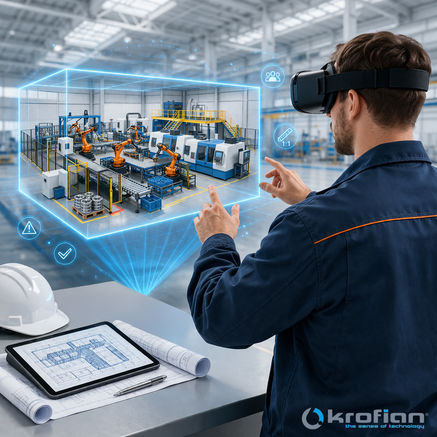


Virtual Reality in Production Line Design
Virtual Reality in Production Line Design
Traditional drawings or 3D models on a monitor may provide the necessary technical information, but they do not always allow for a realistic perception of space, distances, and the overall layout of the technology. This is where virtual reality (VR) comes in, offering an entirely new way to present industrial projects.
Using VR headsets, the customer can step into a digital model of their production hall and walk through the design of the new production line at a real‑world 1:1 scale. This gives them an immediate understanding of how the technology will be integrated into the existing production layout. The customer can walk through individual workstations, check access routes, handling areas, or the placement of specific equipment.
Better decision‑making through a realistic perspective
One of the biggest advantages of using virtual reality is the ability to see the project as it will look in reality. The customer no longer needs to interpret technical drawings or imagine the dimensions of individual devices. The virtual environment makes it easy to understand the overall concept of the production line and its connection to existing manufacturing processes.
This approach significantly simplifies decision‑making during project approval. The customer gains confidence that the proposed solution meets their expectations and operational needs.
Identifying issues before implementation
Another major benefit is the ability to detect potential issues already in the design phase. A virtual walkthrough of the production line can, for example, reveal insufficient handling space, limited access for maintenance, or possible collisions with existing equipment.
Thanks to VR, these issues can be identified before the manufacturing of the equipment begins. The customer can then work with the project team to adjust the layout in time and avoid costly changes during project execution.
Improved communication between the customer and the project team
Virtual reality also significantly enhances communication between the technology supplier and the customer. All project participants can discuss the same virtual model and jointly search for the best solution. This gives the customer an active role in the final arrangement of the production line.
This method of presentation also makes it possible to involve production staff who will work with the technology in the future. Their practical experience can contribute to further improvements in the design.
A modern tool for safe production planning
Virtual reality is becoming an important tool in modern industrial engineering. For customers, it provides greater confidence when planning investments in new technology. Thanks to the realistic presentation of the production line, they can better assess the functionality of the proposed solution, optimize the layout of the production hall, and minimize project risks.
VR thus supports not only designers in developing the technology but, above all, customers in making decisions about the future shape of their production.